Scent is the most seductive path to the human senses, forging a powerfully direct path to our emotions, memories and moods.
As an article in Print Power Magazine described over a decade ago, “Nothing tantalizes the senses more seductively than scent.”
In the years since, the ability to recreate and infuse products, packaging and print promotions with long-lasting and realistic scents in hundreds of varieties has only grown, while much of the science behind this powerful sense and its ability to influence the emotional parts of the brain remains tantalizingly mysterious.
Human Biology and the Scent of Freshly Baked Bread
Scent research tells us that the sense of smell is the most direct human sense as it influences as much 75% of the emotions that we feel. “The sense of smell has very strong links to emotional parts of the brain,” writes Professor Charles Spence, head of the Crossmodal Research Laboratory and a specialist in consumer psychology and sensory marketing.
Research into the connections between scent and emotion has established the link between specific scents and feelings. This is sometimes referred to as the “Proust Phenomenon,” to describes how smells can trigger memories and emotions in a way that other senses do not. The term comes from the French writer Marcel Proust’s description of a memory stirred by the scent of a madeleine biscuit soaked in tea in his novel, “À la Recherche du Temps Perdu.”
Scent Marketing
Research shows that incorporating scent into marketing can significantly increase its memorability and drive sales.
Scent drives brand engagement and awareness and can create a mood or impression that enhances the likelihood of a sale by as much as 10-20%. In one study from Washington State University, scientists found that people spent 20% more while shopping in the presence of a simple, pleasing scent.
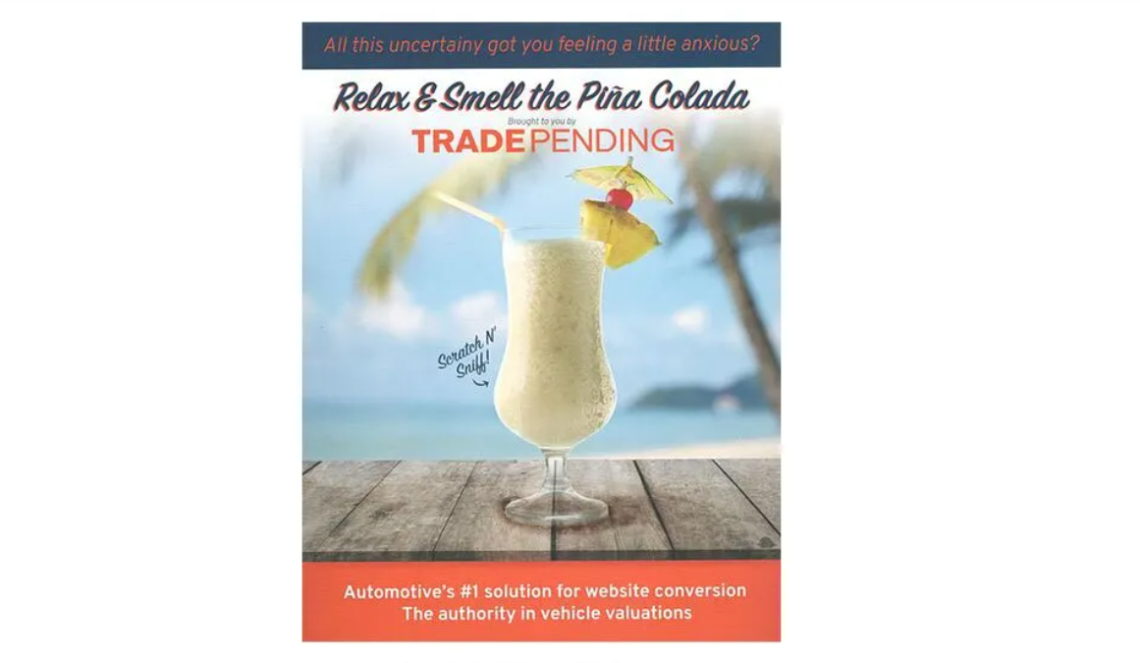
With the ability to incorporate scented inks into a wide variety of print marketing, products and packaging, scent marketing companies have experienced increasing demand and innovation as brands look to leverage the appeal of scent in new and imaginative ways.
The scents themselves are not always exactly “appealing” in the usual sense: strange, unexpected or even off-putting smells can create a powerful sense of curiosity and a one-of-a-kind marketing campaign that won’t go ignored. From taco-scented wrapping paper to scratch-and-sniff maps with the smell of moose poop and marijuana created to promote a reality television show, scent marketing is an opportunity to let your imagination – and your senses – run free.
No one holding a macaroni and cheese or margarita-scented marketing promotion ever passed up the opportunity to inhale.
In recent years, popular campaigns have incorporated a wild variety of scents into everything from stickers to billboards to posters, to scent postcards and other promotions. One unusual promotion used beef, catnip and cedar-scented posters to generate buzz for a brand of airline-approved pet carriers. The posters, placed at pet-height in parks across Boston, Chicago, New York and San Francisco, targeted the exponentially more powerful sense of smell found in pets to draw the attention of their owners, who had no choice but to notice.
From bubble gum to denim to the smell of a freshly cut grass, the power of scent marketing to set the mood or spark a memory goes far beyond the simple “ahh” that a pleasant aroma can induce. Scented inks are also effective in combination with other sensory effects including textures, glitter and chromic reveals to create a powerful and unique multisensory experience your customers and prospects will remember.